Website and conversion path
Clarify service-line pages, landing pages, forms, phone CTAs, local search paths, and booking flows so more visitors become qualified opportunities.

Home Services
Able.Digital helps growing home services companies fix their website, AI intake, CRM, dispatch handoff, attribution, and reporting gaps that cause revenue to leak after the click.
Why this matters
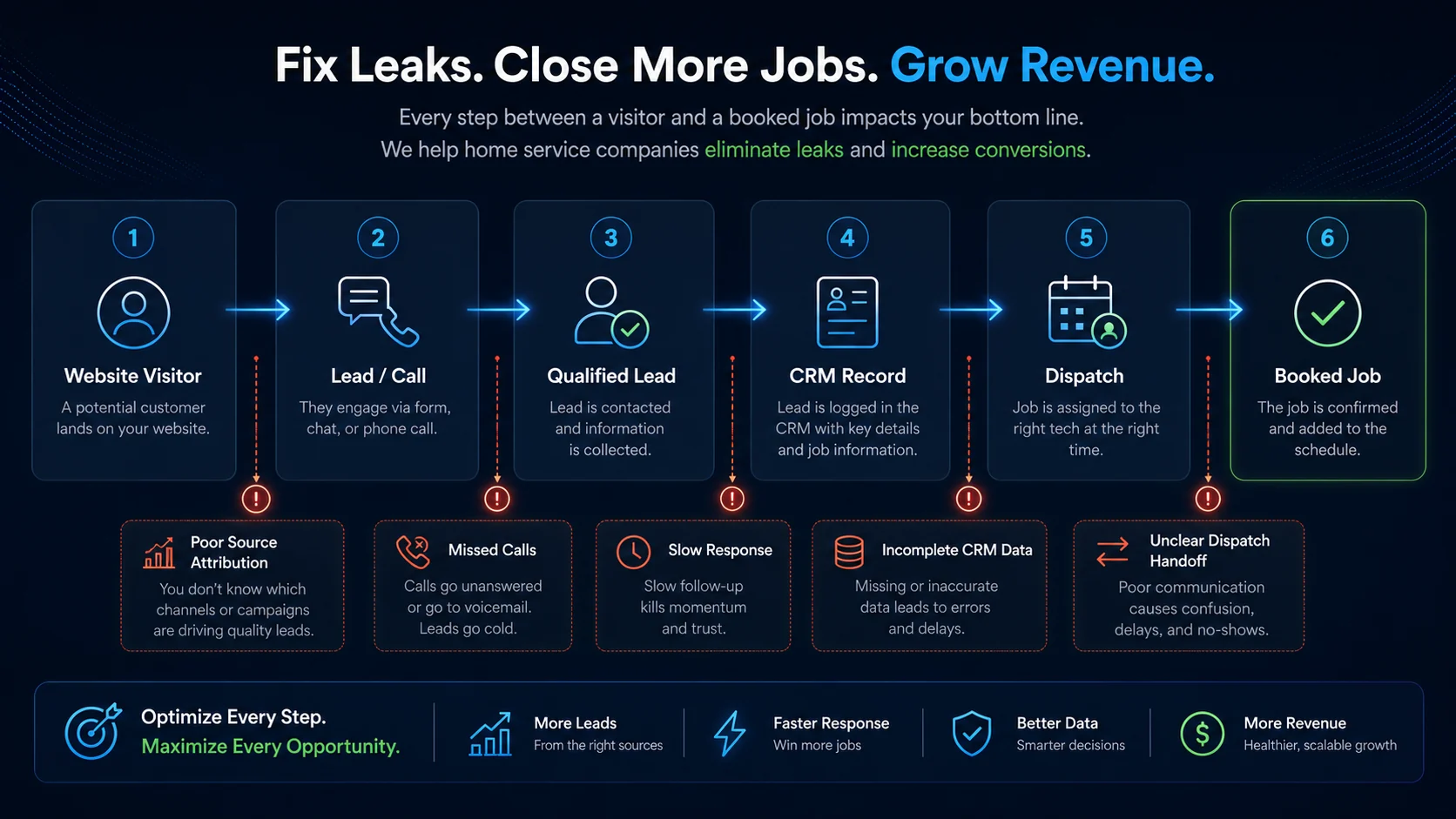
They lose revenue because the system after the click is fragmented. Leads arrive from paid search, local service ads, referrals, calls, forms, chat, and website visits, but the company cannot see every handoff clearly enough to improve it.
What we fix
We align the parts that usually sit in separate silos: website, landing pages, AI lead intake, call handling, CRM, dispatch, attribution, dashboards, and optimization cadence.
Clarify service-line pages, landing pages, forms, phone CTAs, local search paths, and booking flows so more visitors become qualified opportunities.
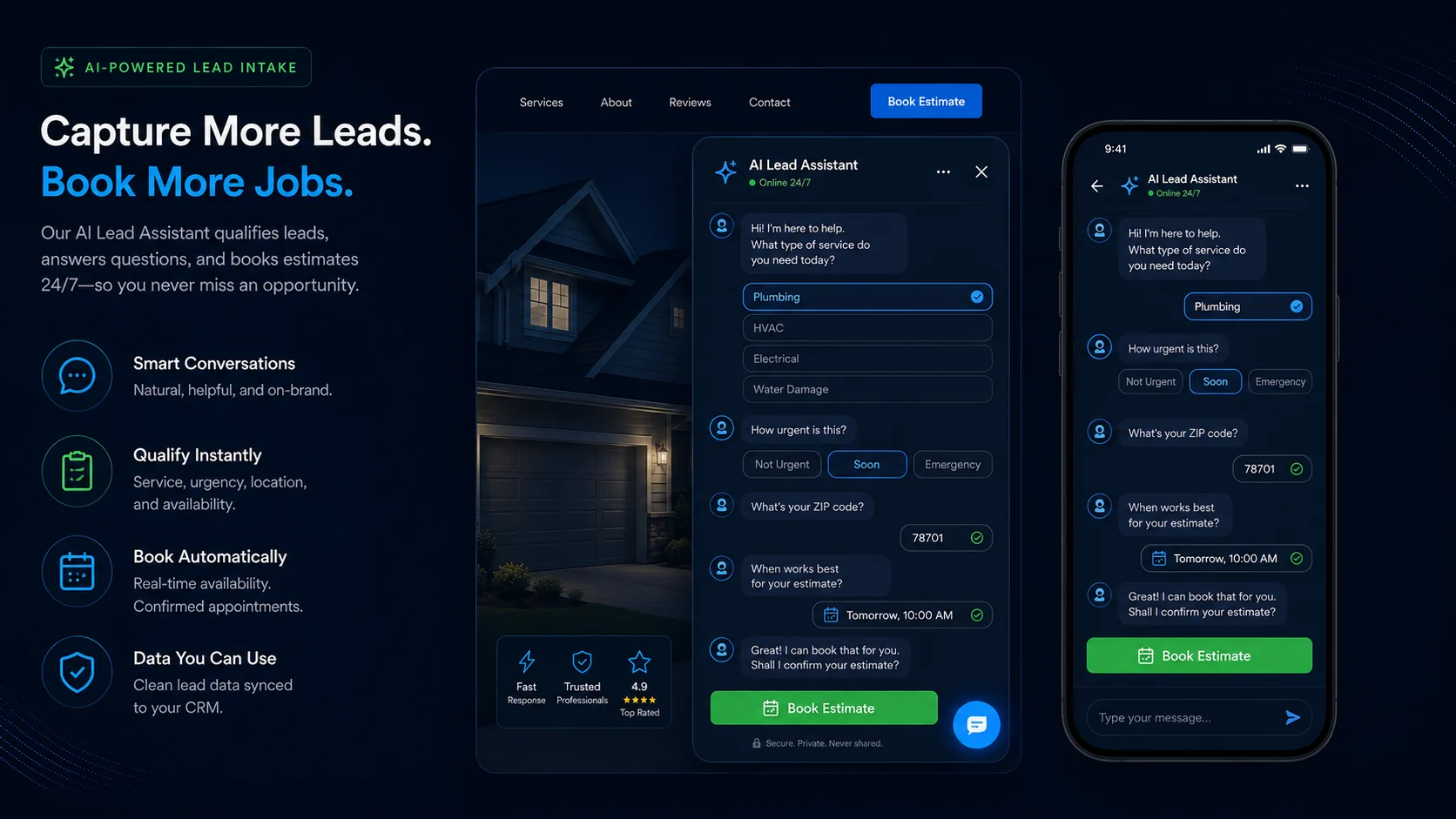
Use AI to support response speed, qualification, routing, call summaries, chat intake, and human escalation without losing operational control.
Connect source, urgency, service line, location, estimate, dispatch status, booked job, and revenue reporting into a cleaner operating view.
AI that supports operations
For home services, AI works best when it is connected to the real operating model: urgency, geography, service line, technician availability, dispatch rules, CRM fields, and clear human escalation.
90-day sprint
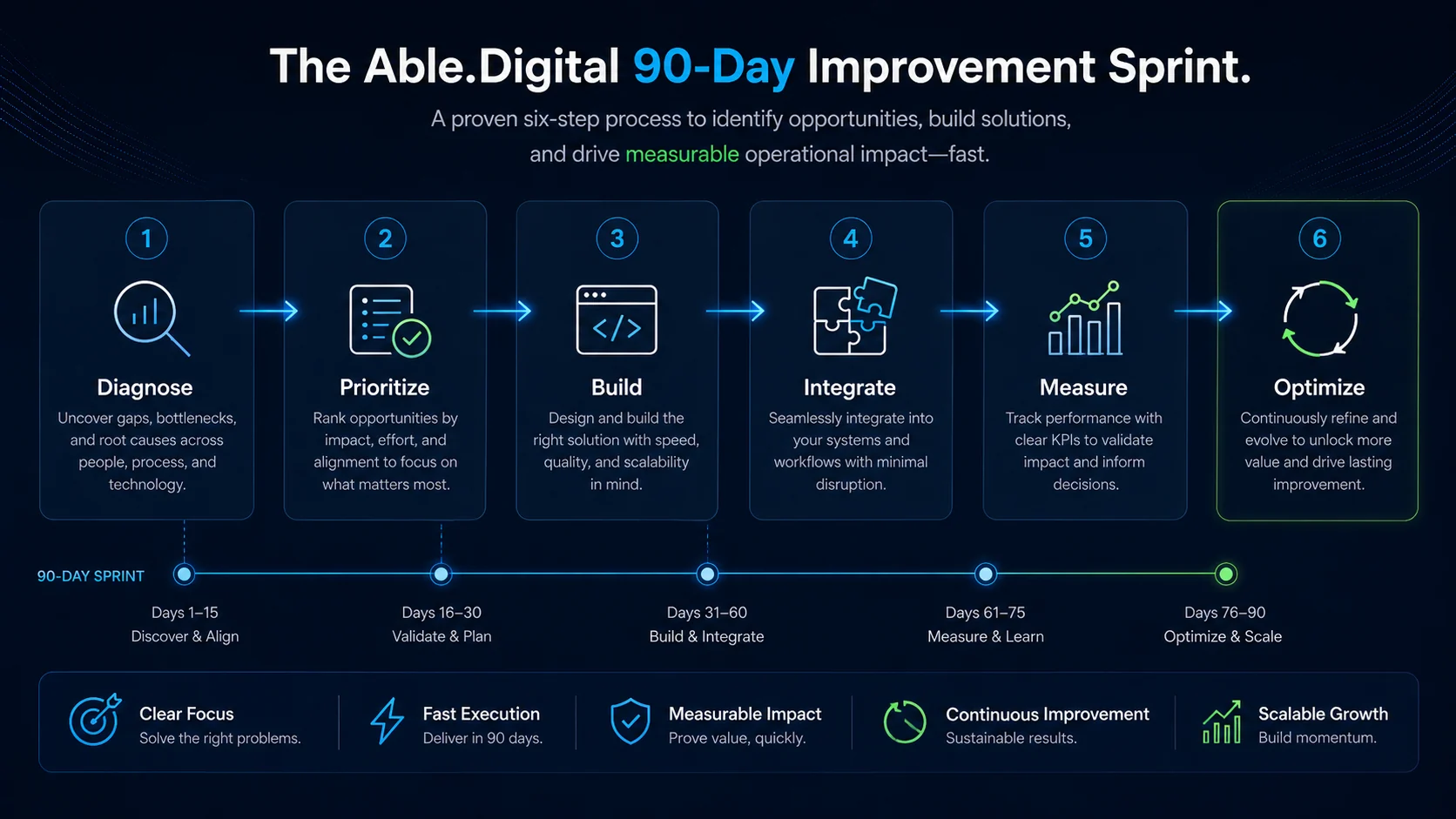
We recommend starting with a focused 90-day sprint instead of a bloated transformation program. The goal is to find the most material revenue leaks, build practical fixes, and prove measurable improvement quickly.
Reporting and attribution
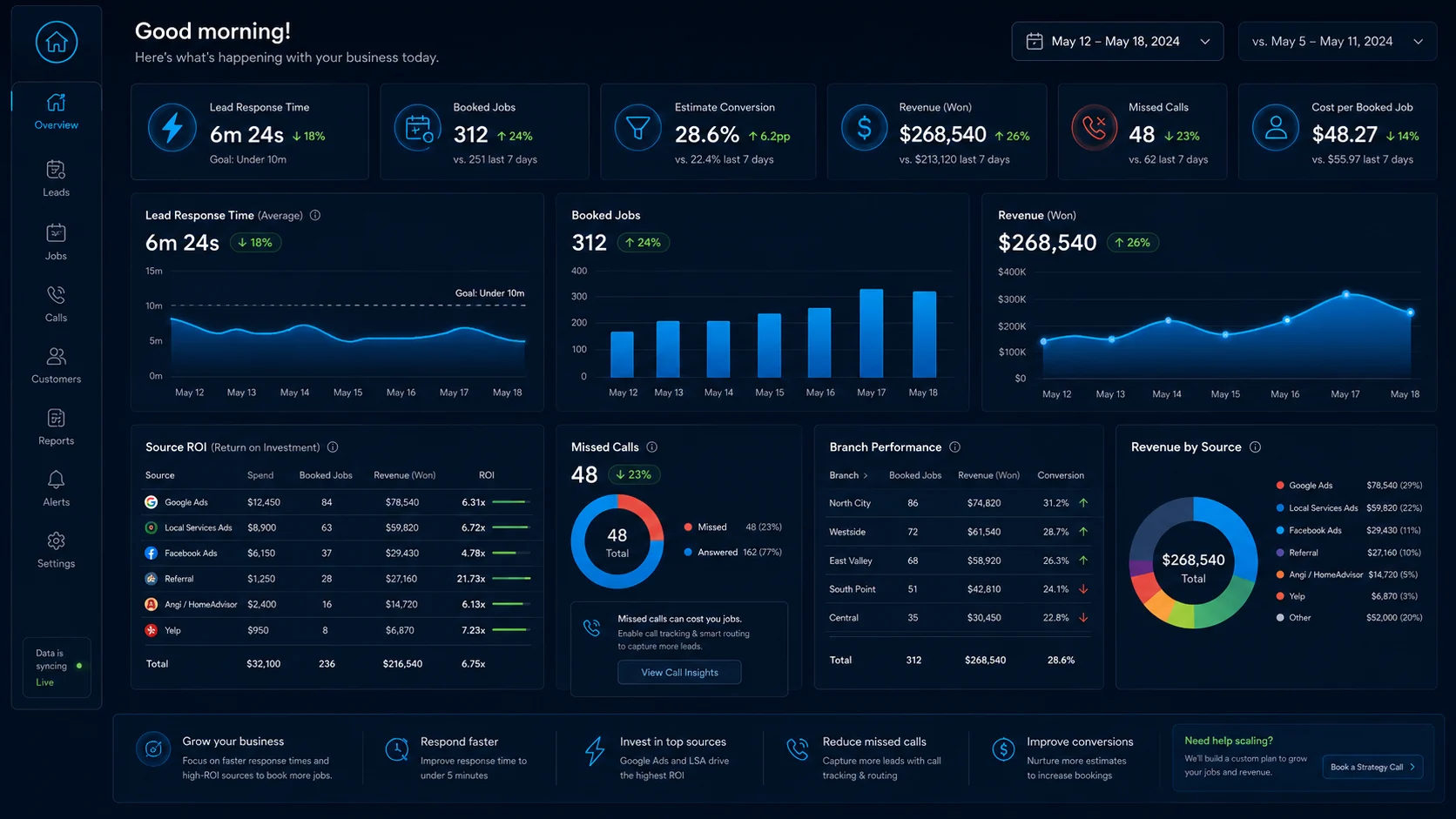
The right dashboard should show where revenue is actually coming from: response time, booked jobs, missed calls, estimate conversion, cost per booked job, branch performance, and revenue by source.
Operating model
Able.Digital combines senior advisory, AI and CRM architecture, web conversion, data/reporting, and practical implementation capacity so you do not have to coordinate a disconnected set of vendors.
Review website, paid lead paths, call handling, forms, chat, CRM, dispatch handoff, attribution, and reporting.
Identify the highest-impact revenue leaks and sequence the fixes that can show measurable progress quickly.
Define the workflows, fields, handoffs, automation rules, dashboards, and AI intake requirements.
Implement landing pages, CRM updates, AI intake support, dashboards, routing logic, and reporting improvements.
Support the cadence, optimization backlog, campaign-to-CRM visibility, and operational reporting discipline.
Measure response time, conversion, booked jobs, revenue by source, branch performance, and customer journey gaps.
Use cases

Improve how website visitors, calls, and local service leads become qualified booked jobs.

Clarify handoffs from inquiry to schedule, estimate, dispatch, and follow-up.

See branch-level source performance, booked jobs, response time, and operational gaps.
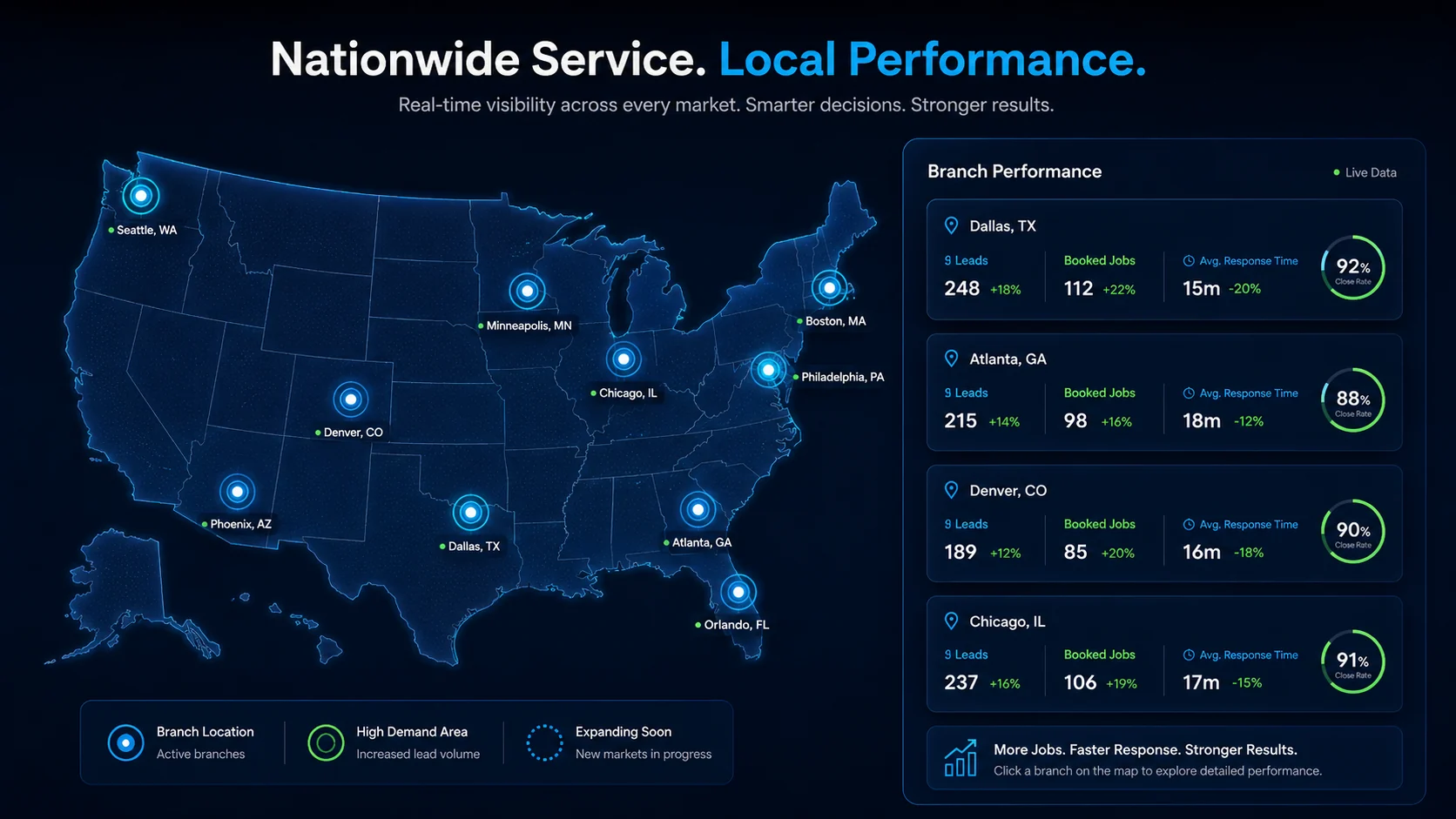
Connect marketing, service territory, CRM, and reporting so growth decisions are easier to make.
Click image to enlargeBest first step
The audit reviews the highest-impact parts of your conversion system and identifies the gaps that are most likely causing paid leads, calls, forms, or website visitors to fail before becoming booked jobs.

FAQ
It is both, but the focus is the operating system behind growth. We improve the connection between marketing, website conversion, AI intake, CRM, dispatch handoff, attribution, and reporting so paid demand has a better chance of becoming booked jobs.
No. Able.Digital has deep Salesforce experience, but the right answer depends on your current systems, team, budget, and operating model. The audit can work with Salesforce, HubSpot, ServiceTitan, spreadsheets, call tracking, dispatch platforms, or other tools.
Yes. We can design and implement AI intake experiences, but we only recommend them when they are connected to real workflows: urgency, service line, geography, technician availability, CRM fields, and escalation rules.
Yes. This page is intentionally hidden from the main menu, footer, homepage, service cards, and sitemap. It can be used for ads, email, direct outreach, or specific campaign traffic.
Start with a focused review of your website, AI intake, CRM, dispatch handoff, attribution, and reporting.